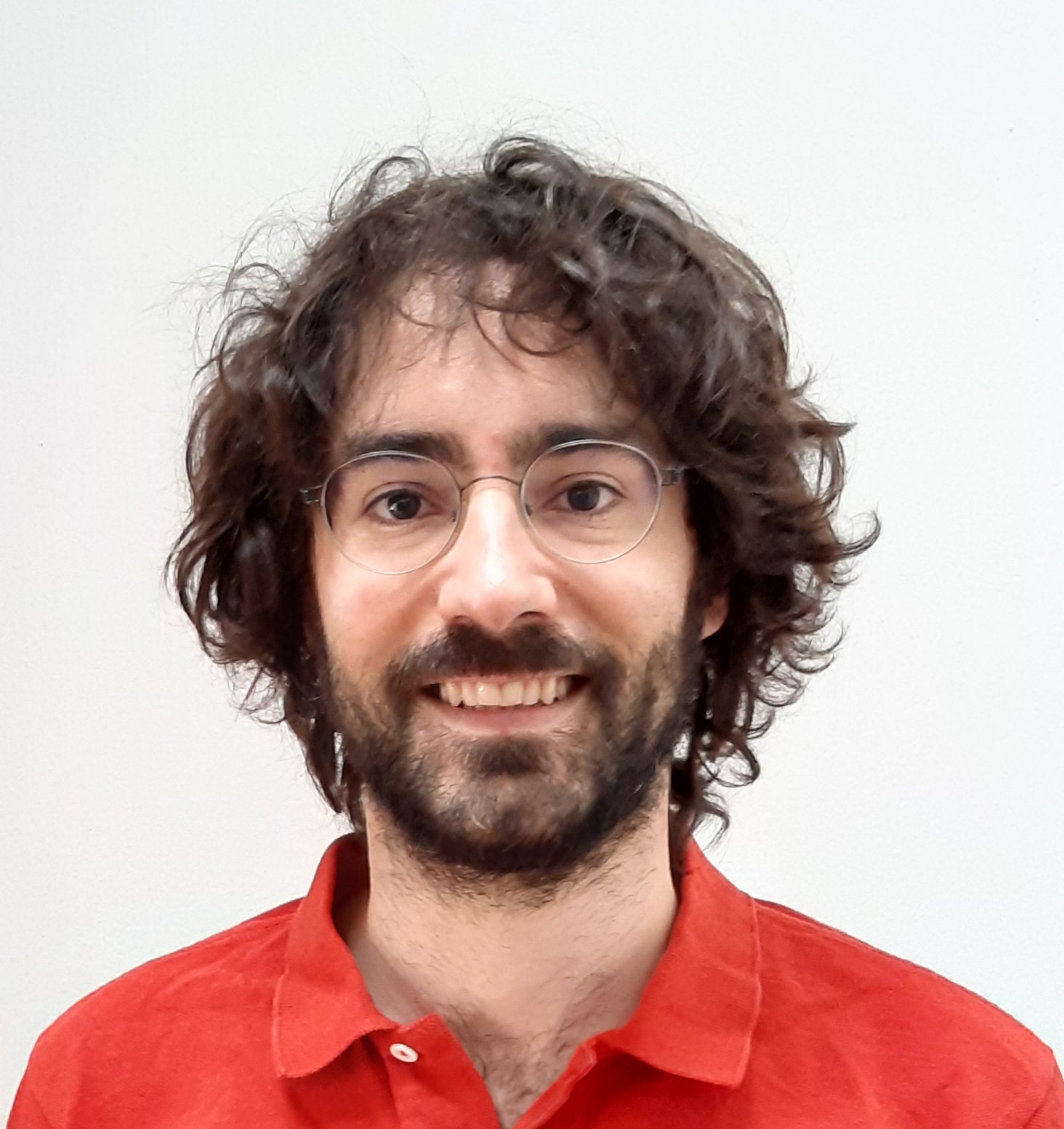
Giacomo Castiglioni
Who am I
My background is in computational fluid dynamics and, during my career, I transitioned from being a domain scientist to HPC software engineering and my current role as a senior researcher at Huawei working on the AI software stack and compilation.
I enjoy understanding the interaction among different layers of the software stack and the hardware and how it affects performance.
In the past few years I have been focusing on compilers, code generation, and domain-specific languages in the context of optimizing kernels and whole programs programmatically for different hardware.
Bio
I obtained my M.Sc. and PhD degrees in aerospace engineering from the University of Southern California, USA, in 2011 and 2015 respectively, while my B.Sc. in mechanical engineering was obtained at the Polytechnic University of Milan, Italy, in 2009.
My PhD thesis was related to high-fidelity turbulence modeling for separated and transitional flows, and the quantification of numerical errors.
After my doctoral appointment, I worked at Tesla Motors as a computational fluid dynamics analyst in both the thermal and external aerodynamics groups.
While at Tesla I submitted a patent for a novel vent design.
In 2016, I was a postdoctoral scholar at the California Institute of Technology (USA) working on high-fidelity simulations of multi-species supercritical flows.
When I moved to Imperial College (UK) in 2018, I worked on high-order unstructured methods for shock-wave boundary layer interactions.
Here I started my transition from domain scientist to software developer working on the open-source spectral finite element solver Nektar++.
Among other topics, I ported a few kernels that utilize the single instruction multiple data (SIMD) paradigm for which I wrote a simple,
header-only SIMD library.
In 2020, I moved to Switzerland to join the Blue Brain Project at EPFL as an HPC software performance engineer, and in 2021 ETH Zurich as an HPC software engineer for QuICC, a software for dynamo (magnetohydrodynamics) simulations, where I designed a domain-specific, high-level MLIR dialect to optimize its computational graph.
From 2024 to 2026, I was a research software engineer at the Swiss National Supercomputing Centre (CSCS), exploring code generation pipelines for JAX and PyTorch (OpenXLA, Triton, IREE) and profiling and optimizing applications on the CSCS supercomputing infrastructure.
Since March 2026, I am a senior researcher at Huawei in Zurich, working on the AI software stack and compilation.
Experience
Senior Researcher
AI software stack and compilation.
Research Software Engineer
Exploring different code generation pipelines for JAX and PyTorch (OpenXLA, Triton, IREE).
Profiling and optimizing supported applications on CSCS supercomputing infrastructure.
Wrote passes in MLIR to optimize the computational graph of a domain-specific, high-level MLIR dialect.
HPC Software Engineer
HPC Software Engineer for QuICC, a software for dynamo (magnetohydrodynamics) simulations.
Designed and wrote a domain-specific, high-level MLIR dialect to optimize the computational graph.
Refactored for hybrid parallelization (mpi+GPU/threads).
Refactored building (CMake) and testing infrastructure (CI/CD).
Freelance Software Engineer
Freelance Software Engineer working on the C++ based, open-source, spectral finite element framework Nektar++.
Implemented a DSL using the MLIR framework for generating performance-critical kernels for different back-ends.
Implemented Arm SVE back-end for in-house SIMD library.
HPC Software Performance Engineer
HPC Software Performance Engineer in the HPC team at the Blue Brain Project.
Developer for HBP (Human Brain Project) STEPS (STochastic Engine for Pathway Simulation).
Investigated explicit SIMD libraries as a possible alternative to auto-vectorization in CoreNEURON.
Research Associate
Senior developer of the C++ based, open-source, spectral finite element framework Nektar++.
Optimization of compressible solver with in-house SIMD library.
High-fidelity simulations (LES/DNS) to predict shock wave unsteadiness in turbofan intake cowls at off-design conditions.
Implementation and validation of shock capturing schemes in an open-source high-order finite element CFD software.
Postdoctoral Fellow
DNS simulations of multi-species, high-pressure flows relevant to fuel injection.
Implemented a thermodynamic model to predict phases of fuel-air mixtures.
Senior Engineer External Aerodynamics
Responsible for researching alternative CFD methodologies.
Senior Engineer Thermal/Aero Systems
Responsible for HVAC aerodynamics of Model 3.
US patent for novel air vent design (US010464397B2).
Research Assistant
Prediction of laminar separation bubbles over wing/blade geometries.
Large Eddy Simulations.
Quantification of numerical dissipation.
Immersed Boundary, Finite Volume code.
Parallel computing.
Computational Fluid Dynamics Analyst
Summer internship, simulations run on a cluster with STAR-CCM+ software.
Teaching Assistant
AME 499 Turbine Design and Analysis.
AME 408 Computer-Aided Design of Mechanical Systems (SolidWorks/CosmosWorks).
AME 301 Dynamics.
AME 150 Introduction to Computational Methods (MATLAB).
Education
PhD in Aerospace Engineering
MS in Aerospace and Mechanical Engineering
Computational Fluid and Solid Mechanics track.
MS coursework in Mechanical Engineering
Exchange student, Erasmus program.
BS in Mechanical Engineering











Patents & Publications
- US patent for novel air vent design (US010464397B2)
- Full list of publications on Google Scholar